
How to Mulch Around Trees Without Causing Rot
Why Mulch Matters — and Where It Goes Wrong
Mulch is one of the kindest things you can do for a tree. A good layer of organic material over the root zone mimics the leaf litter of a woodland floor: it holds moisture through dry spells, suppresses competing weeds, buffers soil temperature, and slowly feeds the worms, fungi and bacteria that keep soil alive. On a newly planted tree in a UK garden, a well-made mulch ring can genuinely mean the difference between it establishing and it sulking for three years.
The trouble is that mulch is also easy to get wrong, and the mistake almost always happens in the same place: right up against the trunk. Piled high and touching the bark, mulch stops being a benefit and becomes a slow, damp compress that softens tissue and invites decay. You will have seen the result — the cone-shaped mounds around street trees and garden specimens that horticulturists call mulch volcanoes.
The Golden Rule: Keep It Clear of the Trunk
Leave a clear gap between the mulch and the trunk. Five to ten centimetres — roughly a hand's width — is a sensible target, and the same distance all the way around.
The reason is straightforward. Tree bark above ground is adapted to air. It needs to dry out between wet spells, and it breathes through small pores called lenticels. Bury it under a permanently moist layer and you create exactly the conditions that favour fungal and bacterial decay, particularly in our damp British climate. You also encourage adventitious roots to grow up into the mulch, where they dry out and die in summer, and occasionally girdle the trunk.
The key landmark is the root flare — the point where the trunk widens and thickens as it meets the roots. It must stay visible and uncovered. If you cannot see it, gently pull the mulch back until you can.
- Never bury the graft union on fruit trees such as apple, pear and plum.
- Keep mulch clear of stakes, ties and tree guards, which trap moisture against the bark.
- Check after storms, after heavy rain splash, and after foxes or cats have been rearranging things.
Depth: No More Than a Hand's Width
Aim for five to seven centimetres of mulch, with ten centimetres as an absolute ceiling on light, sandy soils. On heavy clay, which already holds water, stay shallower — around five centimetres is plenty.
To judge it, lay your hand flat on the surface. The mulch should come up to roughly the depth of your hand across the knuckles, no more. If you can push a finger through the layer to the soil without much resistance, the depth is about right.
Rot sets in when mulch is deep enough that the lower layers stay permanently wet and airless. That is why topping up is the sneaky problem. Rake the existing mulch first, break up any matted pan, and add only enough to restore the correct depth. A generous five-centimetre top-up every spring for four years leaves you with an airless mound — and the tree will show it, with pale growth, dieback in the crown and bark that crumbles at the base.
Spread It Wide, Not High
Mulch works best when it is broad. Extend the ring out to the drip line — the outer edge of the canopy, where rain falls off the leaves — and beyond if you have room. Roots spread far wider than most people imagine, often two or three times the height of the tree.
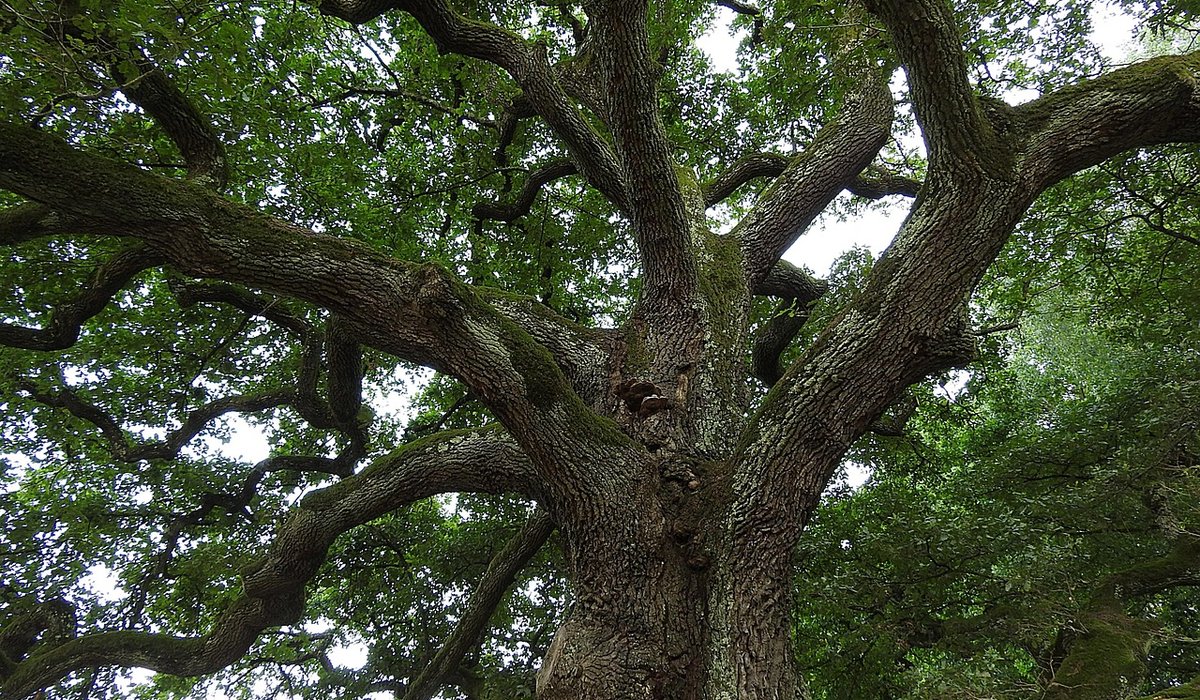
For a young whip, a ring a metre across is a good start. For a mature oak, be generous and think in metres. On a woodland edge or in a copse, mulch in broad sweeps rather than neat individual collars, but still keep every trunk clear of material.
Where trees sit in a border, mulch around the whole planting area rather than creating a mound against each stem. This discourages the temptation to heap material where it does not belong.
Choosing the Right Mulch
- Composted bark or bark chip: the reliable all-rounder. Dark, tidy, long-lasting, and a good match for ornamental borders.
- Woodchip from local tree work: excellent value. Fresh chip is fine as a surface mulch, but never dig it into the soil, as it robs nitrogen as it breaks down.
- Leafmould: superb for woodland plants and acid-loving trees such as birch and magnolia. Slow to make, but worth the wait.
- Composted green waste: perfectly good if well rotted and not too fine or sludgy.
- Grass clippings: use thinly and only mixed with rougher material. On their own they mat down, heat up and smell unpleasant.
- Gravel or stone: useful around drought-tolerant planting, but adds no organic matter and can bake in the sun.
Avoid any material that may carry herbicide residue, and never pile fresh manure directly against a trunk.
Timing and a Little Ongoing Attention
Early spring is ideal, while the soil is moist and beginning to warm, and mid-autumn is a good second window. Avoid mulching onto frozen ground or into drought — you will simply trap the wrong condition in place. Water the root zone thoroughly before mulching, because mulch holds moisture in rather than creating it.
Then keep half an eye on things. Two or three times a year, pull the mulch back from the trunk and look for soft, sunken or blackened bark, white sheets of fungal growth between bark and wood, or fruiting bodies near the base. Watch for mouse and vole runs in the layer over winter.
Get the gap and the depth right and this is a job that takes twenty minutes and repays you for decades: steadier growth, healthier roots and a tree that rides out a dry August without flinching.
tag: Tree Health

Emily Hartley Author
Honey fungus spreads through roots and can kill woody plants, so removing infected stumps and improving drainage may limit its impact.
YOU MAY ALSO LIKE
Managing Honey Fungus in a Mature Garden
Sep 3
10Native mixes such as hawthorn, blackthorn and hornbeam offer dense screening, seasonal interest and valuable food and shelter for garden wildlife.
read more
Choosing the Best Hedge for Privacy and Wildlife
Aug 28
10Cut hedges with a slight taper towards the top, use sharp tools and check for nesting birds before you start trimming in spring.
read moreTree Surgery
-

ERRIC CATONA
From spring mulching to autumn leaf clearance and winter pruning, a simple calendar helps trees stay healthy throughout the changing seasons.
May 19, 2016 at 5.12 pm
Reply
ERRIC CATONA
Young saplings benefit from windbreaks, mulch rings and careful watering, while frost protection shields tender growth from cold snaps.
May 19, 2016 at 5.12 pm
Reply -
ERRIC CATONA
A Tree Preservation Order protects selected trees, so check with your local council before pruning, felling or carrying out work that may affect them.
May 19, 2016 at 5.12 pm
Reply
Tree Planting
Your email address will not be published.